American Vs European Roulette
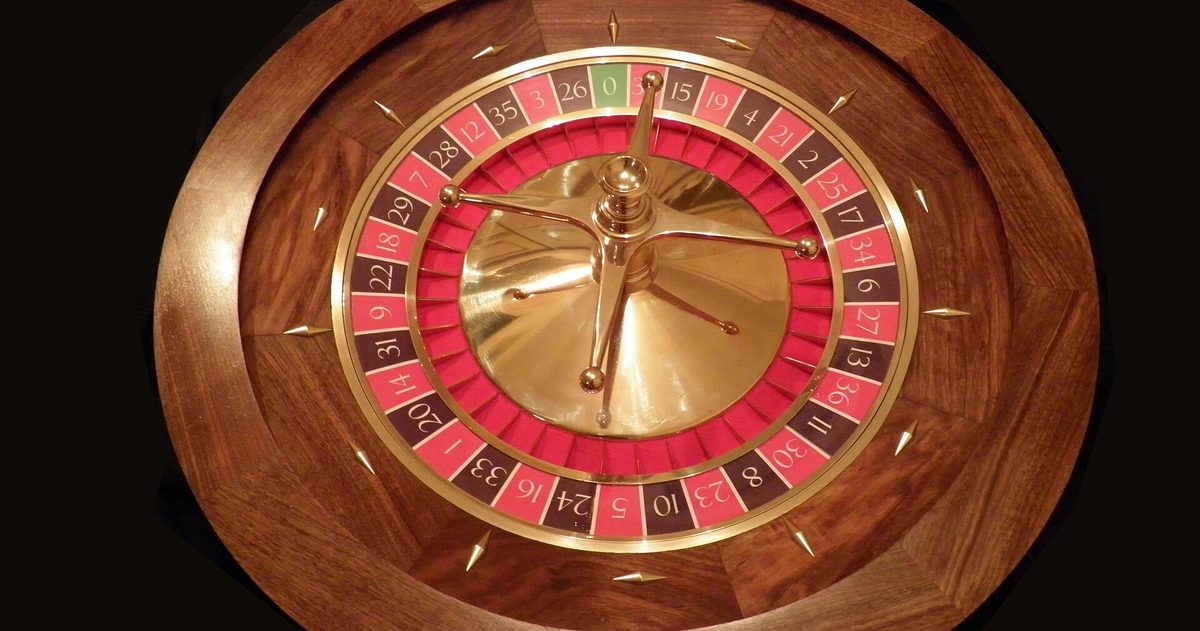
The math of European roulette differs from American by just one pocket. One extra pocket does all the damage.
Casinos that fit this guide
Checked on September 18, 2026. Offshore sites hold no US state licence.
- Editor's pick1

BetUS Casino
250% up to $5,000
- 6 cryptocurrencies
- Crypto payouts in hours
- Sportsbook on the same account
- Live dealer tables
- 2

200% up to $8,000
- 7 cryptocurrencies
- Crypto payouts in hours
- Live dealer tables
- Online since 2019
- 3

125% up to $3,750
- 7 cryptocurrencies
- Crypto payouts in hours
- Sportsbook on the same account
- Poker room
- 4

200% up to $3,000 + 30 free spins
- 6 cryptocurrencies
- Crypto payouts in hours
- Live dealer tables
- Wagering 35x
- 5

300% up to $2,000 + 150 free spins
- 7 cryptocurrencies
- Crypto payouts in hours
- Live dealer tables
- Wagering 40x deposit + bonus
Show the rest of the list
- 6

Las Atlantis
280% up to $2,800
- 6 cryptocurrencies
- Crypto payouts in hours
- Live dealer tables
- Wagering 35x deposit + bonus
- 7

SuperSlots
400% up to $4,000 + 300 free spins
- Crypto payouts in hours
- Live dealer tables
- Online since 2020
- Licence: Panama Gaming Commission
- 8

250% up to $2,500 + 50 free spins
- 4 cryptocurrencies
- Crypto payouts in hours
- Online since 2004
- 9

SportsBetting.ag
100% up to $4,000 + 100 free spins
- 11 cryptocurrencies
- Crypto payouts in hours
- Sportsbook on the same account
- Poker room
T&Cs apply. 21+. Play responsibly.
What is on this page
The 2.55% Difference
Roulette was invented by a French monk and perfected by a French casino owner. But oddly, the casino math on Europe's version favors the players. The two commonest roulette wheels differ by just one extra pocket on the American version: 37 versus 38 pockets. (European roulette has 36 numbers plus one zero, while American roulette adds a double-zero green space.) Yet that one green pocket creates a 2.56-point difference in the casino edge.
The Wheel Difference
The math starts with European roulette. The wheel has 37 pockets, with the numbers 1 through 36 and a single zero. The chance of a wheel spin landing on any one number is 1 in 37, or 2.70 percent. That is, you have 1 chance in 37 to win a straight-up bet. Any payout is 35 to 1. So with 36 red and black numbers and one green zero, the European wheel has a 2.70 percent edge on straight-up bets. That's a 2.70 percent expected win for the casino on bets that land. In the US, the story changes. The American wheel has 37 red and black numbers plus 1 zero and 1 double-zero, so 38 potential landing markers. Every number still pays 35 to 1, but with two greens in the mix, that means a 5.26 percent edge on a straight-up bet. So the American edge is 5.26 minus European's 2.70, or a bit more than double, at 2.56 percent.
The 2.55% Difference in the Long Run
Of course, you will never see a percentage or ratio from gambling on a single spin. Rather, these ratios describe your long-term expected loss — and your long-term expected loss for European roulette is 2.70 for every 37 spins, while for American roulette it is 5.26 for every 37 spins. If you bet an equal unit on the same number, or on a odds-only red-or-black bet, for 100 spins of each, you would expect to lose about 2.70 units on the European version — maybe 1 or 2 or 3 units in the ballpark — and about 5.26 units on the American version — also maybe 1 or 2 or 3 units in the ballpark. In 1,000 spins, it may actually end up closer to those percentages. But even if you play for a total $50,000, you don't know exactly how those percentages will pan out: like all gambling, this is just probabilities. And it's just probabilities even if there are 50,000,000 spins. Each one is independent, even if one pocket landed last time and one color has landed more often. It's why they call it gambling, each spin is an independent event. (In fact, a Harvard statistician proved that won't work.)
One Exception: 5-Number Bet
Beyond the one-pocket difference, the two versions of roulette have one other mathematical difference. The American wheel includes a five-number bet covering zero, double-zero, one, two and three. That option does not exist in Europe. From a math perspective, the five-number bet has an expected profit to the casino of 7.89 percent, while any other straight-up bet on a number pays 35 to 1.
European Rules for When it Hits Zero
Finally, many European casinos use two side rules known as la partage and en prison. They both kick in when the ball lands on zero: if you bet an even-money wager like red/black or even/odd, the casino returns half your money with la partage. The bet stays on the table and gets a free rerun with en prison. Both dramatically cut the house edge on even-money bets, to 1.35 percent. Those rules are almost never used on American tables. So there is another small difference: the European wheel with those rules has the lowest house edge, at least on even-money bets, and that edge is half of the 2.70 on straight-up bets. In the end, the only difference in the American wheel is one extra pocket. And it costs you.